With energy prices remaining unpredictable and sustainability becoming a priority for organisations across every sector, many business owners are asking the same question: is investing in solar PV for a commercial building really worth it?
For many businesses, the answer is yes. Solar photovoltaic (PV) systems have become more efficient, more reliable and more affordable than they were a decade ago. While the upfront investment can seem significant, the long-term benefits often include lower electricity bills, greater energy independence and a reduced carbon footprint.
That said, solar isn’t the right solution for every property. Factors such as roof size, energy usage, building orientation and future expansion plans all influence whether a commercial solar installation offers good value.
In this guide, we’ll explore how commercial solar PV systems work, their advantages, the considerations before investing and why professional design and installation are essential.
What Is Solar PV?
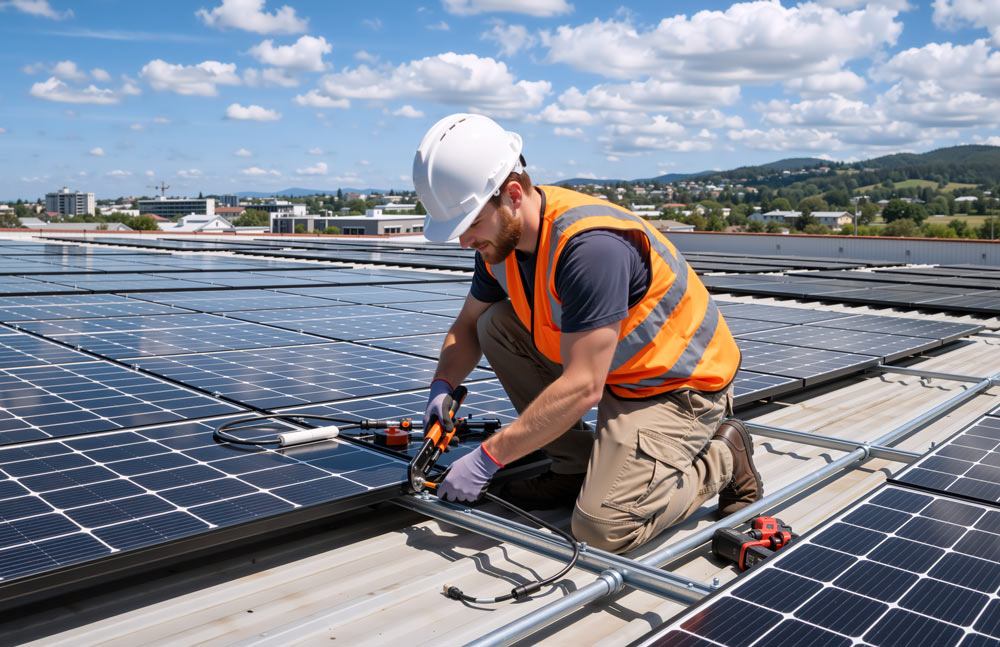
Solar photovoltaic (PV) technology converts daylight directly into electricity using photovoltaic panels installed on a roof or mounted on the ground.
Unlike solar thermal systems, which heat water, solar PV generates electrical power that can be used throughout your building to operate lighting, computers, machinery, heating, cooling systems and other electrical equipment.
When the system generates more electricity than your building is using, the excess may be exported to the national grid or stored in battery systems for later use, depending on the installation.
Modern commercial solar systems are designed to operate efficiently throughout the year, even on cloudy days. While output naturally increases during brighter weather, the panels continue generating electricity whenever daylight is available.
Why Are Businesses Choosing Solar?
Businesses are under increasing pressure to reduce operating costs while demonstrating environmental responsibility.
Electricity is often one of the largest ongoing expenses for commercial premises, particularly offices, warehouses, factories, schools and retail buildings that operate throughout the day.
Solar PV offers a practical way to generate a proportion of that electricity on-site, reducing reliance on grid-supplied power.
Some of the main reasons businesses invest in solar include:
- Lower electricity costs
- Protection against rising energy prices
- Reduced carbon emissions
- Improved sustainability credentials
- Greater energy independence
- Long equipment lifespan
- Increased property appeal
- Support for Environmental, Social and Governance (ESG) objectives
For organisations with high daytime electricity consumption, solar energy often aligns well with normal operating hours, allowing much of the electricity generated to be used immediately.
How Much Can a Commercial Solar System Save?
One of the biggest attractions of commercial solar PV is the potential to reduce ongoing energy costs.
The amount your business could save depends on several factors, including:
- Your annual electricity consumption
- The size of the solar installation
- Local weather conditions
- Roof orientation and pitch
- Electricity tariffs
- How much generated electricity you use on-site
Buildings that consume large amounts of electricity during daylight hours often achieve the greatest financial benefit because they use more of the energy they generate rather than exporting it.
Although savings vary between properties, many businesses experience noticeable reductions in their electricity bills once a properly designed system is installed.
Environmental Benefits
Reducing carbon emissions has become an important objective for many organisations.
Installing solar PV demonstrates a commitment to sustainability while helping businesses reduce their environmental impact.
Generating renewable electricity on-site decreases reliance on fossil fuel-generated power and contributes towards national net zero ambitions.
Many organisations also find that customers, employees and investors increasingly value businesses that actively invest in greener technologies.
In some sectors, environmental performance may even play a role in winning contracts or meeting procurement requirements.
Improving Energy Security
Energy prices can fluctuate considerably over time, making budgeting difficult for businesses.
Generating your own electricity provides a degree of protection against future price increases.
While solar panels won’t eliminate your reliance on the electricity grid altogether, they can reduce the amount of electricity purchased, helping businesses gain greater control over their operating costs.
When combined with battery storage, organisations can also store excess electricity generated during the day and use it later when demand increases or electricity prices are higher.
Is Your Building Suitable for Solar PV?
Not every building is an ideal candidate for solar, but many commercial properties are surprisingly well suited.
Factors that influence suitability include:
Roof Size
Larger roof areas allow more panels to be installed, increasing electricity generation.
Warehouses, factories and distribution centres often have extensive roof space, making them particularly attractive for solar installations.
Roof Condition
Before installation, it’s important to ensure the roof is structurally sound and unlikely to require major repairs in the near future.
Installing solar panels shortly before replacing a roof could increase future costs.
Roof Orientation
South-facing roofs generally achieve the highest energy production in the UK.
However, east- and west-facing roofs can also perform well depending on the building’s electricity usage patterns.
Modern solar technology is considerably more flexible than many people realise.
Shading
Nearby trees, taller buildings or rooftop equipment can reduce panel performance if they cast significant shadows.
A professional site survey helps identify any potential issues before installation.
How Long Do Solar Panels Last?
Commercial solar PV systems are built for long-term performance.
Most modern solar panels have expected operational lifespans of 25 to 30 years, and many continue producing electricity beyond this period, although efficiency gradually decreases over time.
Inverters generally have a shorter lifespan and may require replacement during the system’s life.
Fortunately, solar panels require relatively little maintenance.
Routine inspections, occasional cleaning where necessary and periodic electrical testing help ensure the system continues operating efficiently.
The Importance of Professional Design and Installation
Commercial solar installations involve far more than simply fixing panels to a roof.
A properly designed system considers:
- Electrical infrastructure
- Building energy demand
- Structural loading
- Cable routing
- Fire safety requirements
- Future maintenance access
- Grid connection requirements
- Integration with existing electrical systems
Working with an experienced MEP contractor ensures every element of the installation is carefully planned and coordinated.
Professional installation also helps maximise system performance while ensuring compliance with current electrical regulations and building standards.
Integrating Solar with Other Building Services
One of the biggest advantages of working with an MEP specialist is the ability to integrate solar PV with other building services.
Solar generation can complement:
- Electric vehicle charging points
- Heat pumps
- Air conditioning systems
- Building management systems
- Battery energy storage
- Energy monitoring software
- Smart building controls
Rather than treating solar as a standalone installation, integrating it into the wider electrical and mechanical infrastructure often delivers greater long-term efficiency.
As commercial buildings become smarter, these technologies increasingly work together to optimise energy use automatically.
Is Solar PV Worth the Investment?
For many commercial buildings, solar PV represents a sound long-term investment.
Although the initial capital cost should be carefully considered, the combination of reduced electricity bills, improved energy efficiency, lower carbon emissions and greater protection against future energy price increases often makes solar an attractive option.
The strongest returns are generally achieved by businesses that:
- Consume significant electricity during the day
- Have suitable roof space
- Intend to remain in the property for several years
- Want to reduce operating costs
- Have sustainability objectives
Every building is different, so the potential return depends on a detailed assessment of your property and energy usage.
Conclusion
Solar PV has evolved into a proven, reliable technology that can offer substantial benefits for commercial buildings. While the decision to invest should always be based on a thorough assessment of your property’s characteristics and energy requirements, many organisations find that solar delivers lasting value through lower running costs, improved sustainability and increased energy resilience.
When designed as part of a wider mechanical and electrical strategy, solar PV can become an integral part of a more efficient, future-ready building.
At Armstrong MEP, we provide professional mechanical, electrical and plumbing solutions tailored to commercial and industrial projects. Whether you’re exploring solar PV, upgrading your electrical infrastructure or planning a complete building services installation, our experienced team can design, install and maintain systems that support your business both now and in the future.